








The word “Recyclatanteil” has recently sprung to the forefront of conversations around environmentally conscious manufacturing in a world where sustainability is of paramount importance. This German term means “recycled content,” and it tells you how much of a product contains recycled materials. Companies are responding to customers’ growing desire for environmentally friendly products by integrating Recyclatanteil into their production processes.
However, in reality, what does this indicate for Earth? Deciphering the intricacies of Recyclatanteil is about more than just learning new words; it’s about wholeheartedly embracing a future where waste is reduced and resources are repurposed efficiently. Come with us as we investigate the idea further, talk about its advantages, and showcase motivational case studies from forward-thinking businesses that are embracing sustainable methods.
Understanding the Concept of Recyclatanteil
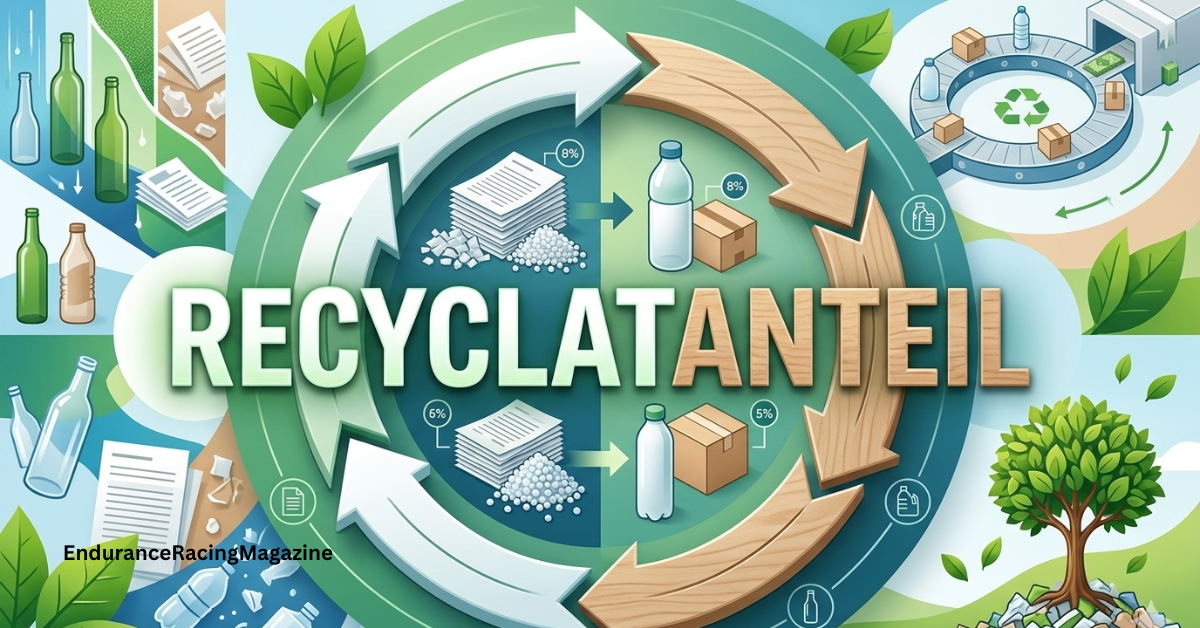
Recyclatanteil is the percentage of raw materials that are recycled during manufacturing. In the context of environmentally responsible production and resource management, this idea is crucial.
The fundamental idea behind Recyclatanteil is to replace virgin raw materials with recovered ones. It promotes the practice of recycling and reusing materials in manufacturing.
Both the reliance on natural resources and the negative effects on the environment are diminished by this method. Companies can reduce energy consumption during material extraction and processing by improving the recyclatanteil.
In addition, it supports the ideas of the circular economy. Businesses have the opportunity to shift away from a linear paradigm that involves discarding things after use and instead develop cycles that maximize material reuse.
If your company is seeking sustainability certifications or wants to boost its corporate social responsibility profile, you must understand this notion. Global initiatives to reduce landfill trash and promote eco-friendly practices across sectors are in line with the goal for increased recyclatanteil.
Benefits of Implementing Recyclatanteil in Production Processes
There are several benefits to using Recyclatanteil in manufacturing operations. It drastically cuts down on the use of raw materials. By making this change, we can reduce our impact on the environment and preserve our precious natural resources.
One further important advantage is the money you save. Companies can reduce their procurement costs by using recycled materials. As a result, business margins are improved without sacrificing product quality.
Additionally, a company’s standing in the market might be elevated by using Recyclatanteil. Companies that put an emphasis on sustainability and eco-friendly operations are seeing an increase in consumer favor. Customer loyalty and the interest of eco-conscious buyers might be enhanced by a firm’s dedication to recycling.
Incorporating recycled elements also encourages new approaches to product design and production. New methods of increasing efficiency or making one-of-a-kind items using recycled materials may be found by businesses.
Recyclatanteil makes it easier to comply with regulations. Staying ahead of laws is made easier with this technique, as many countries have tight standards regarding waste reduction and sustainable sourcing.
You May Like: Euroyungs Com: Complete Guide for 2026
Examples of Companies Implementing Recyclatanteil
Several companies have shown their dedication to sustainability by embracing the notion of Recyclatanteil.
Coca-Cola, for one, has done a lot of good by using recycled plastic in its bottles. In all of their packaging, they aim to incorporate 50% recycled content by the year 2030.
Adidas’ Parley line is a head-turner in the fashion world. These shoes and clothes combine fashion with eco-consciousness by being crafted from plastic trash from the ocean.
At the same time, industry heavyweights like BMW are using recycled materials into their vehicle production methods. This improves the efficiency of the vehicle while also decreasing waste.
By pledging to use a minimum of 25% recycled plastic in its packaging by 2025, Unilever is demonstrating its commitment to product circularity.
All of these cases show how imaginative and useful a Recyclatanteil strategy can be for companies in different industries.
How to Calculate and Improve Recyclatanteil
A simple formula is used to calculate Recyclatanteil. Find out how much stuff you used in your manufacturing process all together. The next step is to determine how much of the total is recycled content.
To calculate the percentage, divide the total weight of recycled materials by their weight, and then multiply the result by 100. Here we may see your present recyclatanteil level.
To improve this ratio, new approaches are needed. You should start by looking at vendors that provide products with a high recycling rate. Think about making a financial investment in technology that can improve your company’s recycling procedures.
Additionally, educating workers on eco-friendly procedures can have a major impact. Inspire creative ideation sessions centered on creating closed-loop systems that incorporate waste into production or increasing the usage of recycled resources.
To ensure that recyclatanteil continues to advance in an ecologically and economically responsible manner, it is important to evaluate current policies on a regular basis and make adjustments depending on the findings.
The Impact of Recyclatanteil on the Environment and Society
When it comes to recycling, Recyclatanteil is an absolute game-changer. Companies can reduce their reliance on natural resource extraction by increasing their use of recycled materials in manufacturing. Energy consumption and carbon emissions will both decrease as a direct result of this change.
In addition, a circular economy is promoted by using Recyclatanteil. To put sustainability first in product design and supply chain management is the message it conveys to companies. Organizations may make a big difference in environmental conservation by adopting these practices.
On a social level, people are more likely to buy eco-friendly products because more people are talking about Recyclatanteil. Industries are driven to innovate in a sustainable way to meet this rising demand, which in turn generates job opportunities in the recycling and green technology industries.
Lowering landfill pressure also helps communities. Overflowing landfills are a threat to public health and ecosystems; if people threw away less, cities would be able to prosper.
Conclusion
More than just a catchphrase, “recyclatanteil” stands for an environmental and business-friendly movement towards more sustainable production practices. Once businesses grasp the concept, they may move forward with concrete plans to incorporate it into their operations. Reduced resource use, improved company image, and compliance with expanding regulations are the evident advantages of implementing recyclatanteil.
By incorporating recycled materials into their goods, forward-thinking companies are showing their dedication to sustainability and earning the trust of their consumers. It is not need to be intimidating to calculate and improve recyclatanteil. Organizations can achieve significant progress with the right assessment processes and tools.
Recycling atanteil has a positive effect on society and the environment that goes beyond just the bottom line. In the ever-changing world of industry, adopting sustainable methods like recyclatanteil is essential for a better future for our planet. Taking this tack puts businesses ahead of the curve in terms of innovation while also assisting in the preservation of important resources for future generations.